- Recommended
- Country plan · or a regional plan for a multi-country Caribbean trip
- Region
- Caribbean
- Major networks
- Flow · Digicel
- Listed by
- Airalo · Yesim · Drimsim · GigSky
- Country code
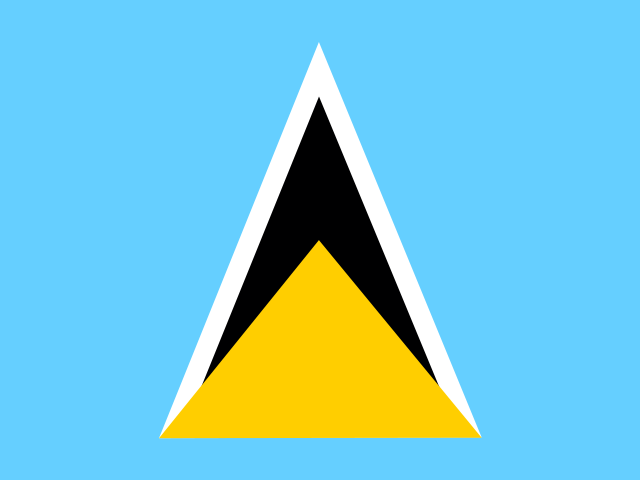 LC
Overview
Saint Lucia is a volcanic island in the eastern Caribbean, known for the twin Pitons, rainforest, waterfalls and resorts set in steep green bays. It is a popular winter and honeymoon destination for Canadians. Flow and Digicel are the two mobile networks, and coverage is good in towns and resort areas, with some gaps in the mountainous interior. A Saint Lucia country plan suits most trips; check the provider's list, because Caribbean plans differ in which islands they include.
Top Cities and Places in Saint Lucia
The Pitons, Gros Piton and Petit Piton, rise above Soufrière on the south-west coast and are a UNESCO World Heritage Site. Nearby are the Sulphur Springs drive-in volcano, mud baths, Diamond Falls and botanical gardens. Rodney Bay in the north has the island's main marina, resorts and Reduit Beach, and Pigeon Island National Landmark has forts and hiking trails. Castries, the capital, has a busy market and cruise port. Marigot Bay is a sheltered anchorage, and the rainforest interior offers zip-lining and hiking.
Regions
The north, around Rodney Bay and Gros Islet, is the most developed resort area, with the Friday night street party. Castries and Marigot Bay are on the north-west coast. The south-west around Soufrière has the Pitons and many boutique resorts. The south, near Vieux Fort, has Hewanorra International Airport. The east coast is windier and less developed, and the interior is mountainous rainforest.
People and Languages
Saint Lucia has a population of roughly 180,000; confirm the latest official figure if you need a current total. English is the official language, and Saint Lucian Kwéyòl, a French-based Creole, is widely spoken. Francophone Canadians may recognise some Kwéyòl words. English is used throughout tourism.
Currency and Payments
The currency is the Eastern Caribbean dollar, pegged to the US dollar, and US dollars are widely accepted. Cards are accepted in resorts, larger restaurants and shops; cash is useful for markets, taxis, vendors and small eateries. We do not publish hotel or restaurant prices. VAT and service charges are often added to bills.
Best Time to Visit
December to April is the dry, peak season. May and June are often pleasant, with fewer visitors. The wetter season runs roughly from June to November and overlaps with the Atlantic hurricane season, with the highest risk typically from August to October. Saint Lucia Jazz and Carnival in summer draw visitors.
Getting There From Canada
Air Canada, WestJet and other carriers have operated direct flights from Toronto and Montréal to Hewanorra International Airport (UVF) near Vieux Fort, mainly in winter; confirm current schedules. George F. L. Charles Airport near Castries mostly handles regional flights. The drive from Hewanorra to Rodney Bay can take over an hour on winding roads. If you connect through the US, your Saint Lucia eSIM will not cover the layover.
Getting Around
Taxis are the most common way to get around and fares are usually agreed in advance. Minibuses are inexpensive and cover main routes. Rental cars are available, but roads are steep, winding and on the left. Water taxis connect Soufrière, Marigot Bay and Rodney Bay and can be faster than driving.
Mobile Networks and Coverage
Flow and Digicel provide good 4G coverage in Rodney Bay, Castries, Marigot Bay, Soufrière and along most main roads. Coverage can be weak in the rainforest interior, in deep valleys and on some hiking trails, including parts of the Gros Piton trail. Confirm the partner network on the plan page.
eSIM Plan Advice by Trip Type
For a Saint Lucia stay, a country plan is enough. If your trip or cruise includes other islands such as Barbados, Martinique or Antigua, check that every island is listed. Light users at an all-inclusive resort may only need a small data bundle.
A Typical Trip
A typical Saint Lucia trip is a week at a resort in Rodney Bay, Marigot Bay or Soufrière, with a boat trip down the west coast to the Pitons, a visit to the Sulphur Springs and mud baths, a rainforest tour and the Friday night street party in Gros Islet. Data use is usually light to moderate: maps for the winding roads, messaging drivers and guides, and photo sharing. Couples and families sharing one plan should confirm hotspot permission.
Practical Phone Tips
Useful phone habits for Saint Lucia: taxi drivers and excursion operators commonly arrange pickups through WhatsApp. Hewanorra transfers are long, so share your trip details with someone at home. Saint Lucia uses UK-style three-pin plugs and 230 volts; most phone chargers handle the voltage, but bring an adapter. The emergency number is 911 or 999.
Tips for Canadians
Keep your Canadian number active on the main line for calls and verification texts. Canadian carrier Caribbean add-ons can be convenient for short trips but often cost more per day than a travel eSIM; compare in your carrier account. Resort Wi-Fi can be slow on balconies and beaches, and the long transfer from Hewanorra is easier with maps and messaging.
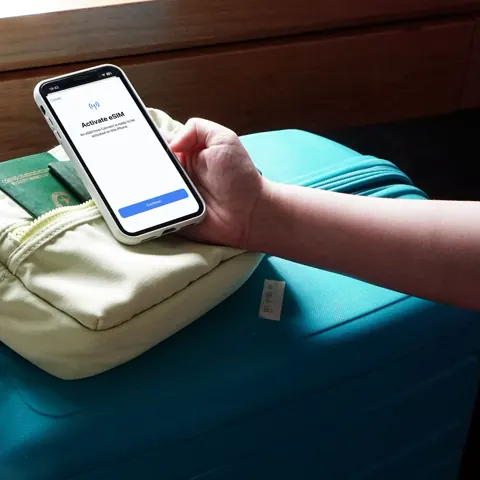
Install the eSIM at home, set it as the data line after landing and turn off roaming on the Canadian line.
Confirm your phone is unlocked, check that Saint Lucia is listed, and check the plan's validity start.
Safety and Connectivity
Follow current Government of Canada travel advice for Saint Lucia at travel.gc.ca; we do not invent risk scores. Petty theft and some violent crime occur. Use licensed taxis, avoid isolated beaches and roads after dark, and use reputable guides for hikes such as Gros Piton.
What Canadians Should Also Know
- Saint Lucia uses UK-style three-pin plugs; bring an adapter for your charger.
Frequently Asked About eSIMs in Saint Lucia
Does my eSIM work on the Gros Piton hike?
Do I need a power adapter in Saint Lucia?
Which airport should I fly into?
Is Saint Lucia in Caribbean eSIM plans?
How much data do I need for a week in Saint Lucia?
Compare Plans for Saint Lucia
These providers list Saint Lucia on their own sites. Confirm price, validity, data allowance and network before you buy. Order is fixed; providers cannot pay for position. Some links earn us a commission at no cost to you. Disclosure.
- Airalo View Plans
- Yesim View Plans
- Drimsim View Plans
- GigSky See Similar Plans at Yesim
Where This Coverage Data Comes From
| Provider | Source | Checked |
|---|---|---|
| Airalo | Airalo Saint Lucia page | 18 November 2026 |
| Yesim | Yesim Saint Lucia page | 18 November 2026 |
| Drimsim | Drimsim Saint Lucia page | 18 November 2026 |
| GigSky | Similar plans at Yesim Source: gigsky.com/country/esim-in-saint-lucia | 18 November 2026 |
A provider listing a destination does not guarantee coverage everywhere in it. Rural, mountain and offshore areas can have gaps.
How Much Data to Buy for Saint Lucia
For maps, messaging and bookings, most travellers use roughly 0.25–0.5 GB a day. Add more for video calls, social uploads or hotspot use. These are estimates, not provider figures. Use the data calculator for a personal estimate.
More Destinations in Caribbean
- eSIM for Aruba
- eSIM for Bahamas
- eSIM for Barbados
- eSIM for Puerto Rico
- eSIM for Anguilla
- eSIM for Antigua And Barbuda
- eSIM for British Virgin Islands
- eSIM for Caribbean Netherlands
 eSIM for Aruba
 eSIM for Bahamas
 eSIM for Barbados
 eSIM for Puerto Rico
 eSIM for Anguilla
 eSIM for Antigua And Barbuda
 eSIM for British Virgin Islands
 eSIM for Caribbean Netherlands
All destinations · What is an eSIM? · Phone compatibility · eSIM vs roaming