- Recommended
- Country plan · or a regional plan for a multi-country Asia-Pacific trip
- Region
- Asia-Pacific
- Major networks
- Smart · Cellcard · Metfone
- Listed by
- Airalo · Yesim · Drimsim · GigSky
- Country code
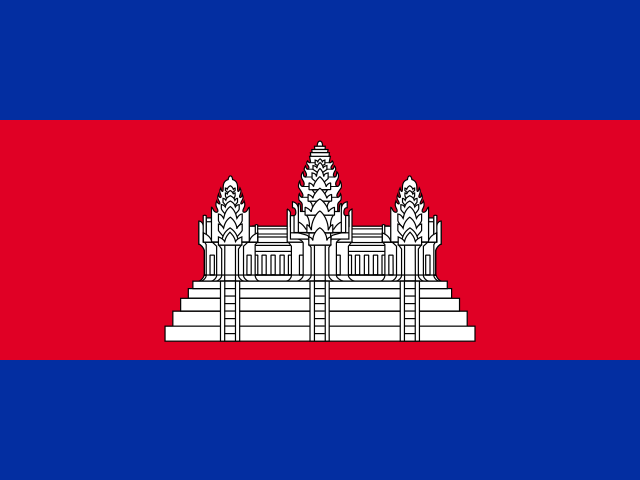 KH
Overview
Cambodia is best known for the temples of Angkor, but it also offers a lively capital, river towns and a southern coast with islands. Many Canadians visit as part of a Southeast Asia trip with Vietnam, Thailand or Laos, which makes an Asia regional eSIM a good choice. Smart, Cellcard and Metfone are the main networks, and coverage is generally good in cities, tourist areas and along main roads.
Top Cities and Places in Cambodia
Siem Reap is the base for Angkor Archaeological Park, including Angkor Wat, the Bayon and Ta Prohm, and has a lively old market and Pub Street. Phnom Penh, the capital, has the Royal Palace, the Silver Pagoda, the National Museum and sobering memorial sites at Tuol Sleng and Choeung Ek. Battambang is known for colonial architecture and its bamboo train. Kampot and Kep, near the coast, are known for pepper farms and crab markets. Koh Rong and Koh Rong Sanloem are island destinations off Sihanoukville.
Regions
The north-west includes Siem Reap, Angkor and Battambang, near Tonlé Sap lake. The centre includes Phnom Penh on the Mekong. The south coast includes Sihanoukville, Kampot, Kep and the islands. The north-east, with Ratanakiri and Mondulkiri, is more remote, with forests, waterfalls and Indigenous communities.
People and Languages
Cambodia has a population of roughly 17 million; confirm the latest official figure if you need a current total. Khmer is the official language. English is common among younger people, guides and staff in tourist areas, and some older Cambodians speak French. Tuk-tuk drivers in tourist hubs often speak some English.
Currency and Payments
Cambodia uses two currencies in practice: the riel and the US dollar. Prices in tourist areas are often quoted in US dollars, and change for small amounts is often given in riel. ATMs typically dispense US dollars. Cards are accepted in many hotels and restaurants, but cash dominates elsewhere. Bring clean, untorn US banknotes, as damaged notes may be refused. We do not publish hotel or restaurant prices.
Best Time to Visit
The cool, dry season from roughly November to February is the most popular time. March to May is very hot. The wet season, roughly June to October, brings afternoon rain, greener scenery, fewer crowds and some flooded rural roads. Khmer New Year in April brings closures and heavy domestic travel.
Getting There From Canada
There are no direct flights between Canada and Cambodia. Itineraries connect through Asian hubs such as Bangkok, Singapore, Hong Kong, Taipei or Seoul. Siem Reap and Phnom Penh have international airports, and many travellers arrive overland from Thailand or Vietnam or by boat on the Mekong. A Cambodia eSIM will not cover layovers in other countries unless they are listed.
Getting Around
Tuk-tuks are the usual way around towns, and ride-hailing apps such as Grab and PassApp operate in Phnom Penh and Siem Reap, which helps avoid fare negotiation. Long-distance buses and minivans connect cities. Domestic flights link Phnom Penh and Siem Reap. Ferries serve the islands. Hiring a driver for Angkor is common.
Mobile Networks and Coverage
Smart, Cellcard and Metfone provide good 4G coverage in Phnom Penh, Siem Reap, the main coastal towns and along major highways, with 5G in limited areas. Within Angkor's main temple complexes coverage is usually adequate; remote temples, the north-east provinces and some islands have weaker signal. Confirm the partner network on the plan page.
eSIM Plan Advice by Trip Type
For Cambodia alone, a country plan is enough. If you are crossing from Thailand or Vietnam, or continuing to Laos, an Asia regional plan that lists every country avoids juggling eSIMs at land borders.
A Typical Trip
A typical Cambodia itinerary spends three or four days in Siem Reap for the Angkor temples, then travels by bus or flight to Phnom Penh, and finishes in Kampot, Kep or the islands, or continues to Vietnam or Thailand. Data use is moderate: ride-hailing, maps, messaging guides and drivers, and translation. Many hotels and cafés have Wi-Fi, but it can be slow; data on your phone is more reliable for navigation and staying in touch.
Practical Phone Tips
Useful phone habits for Cambodia: Grab and PassApp show fares upfront for tuk-tuks and cars. Angkor passes are sold at the official ticket centre and online through the official Angkor Enterprise site. Many hotels and cafés offer free Wi-Fi, but it can be slow. Cambodia uses a mix of plug types, so a universal adapter is useful. Keep a photo of your passport and visa on your phone and a paper copy separately.
Tips for Canadians
Keep your Canadian number active for calls and verification texts. Cambodia's e-visa and arrival procedures may require online forms, so have data or Wi-Fi available before departure.
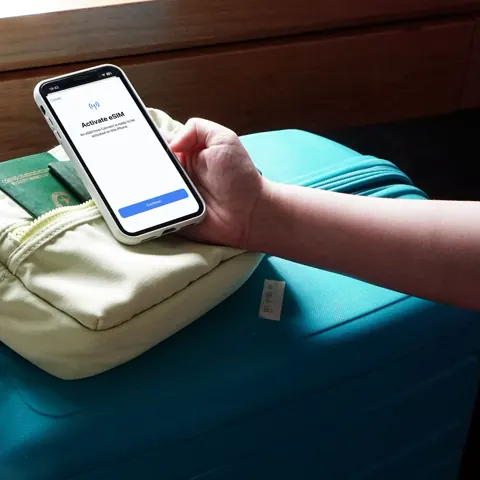
Install the eSIM at home, switch data to it after landing and turn off roaming on the Canadian line. Download a ride-hailing app to avoid negotiating tuk-tuk fares.
Check entry and visa requirements through official Cambodian government sources, confirm your phone is unlocked, and make sure Cambodia is listed on any regional plan.
Safety and Connectivity
Follow current Government of Canada travel advice for Cambodia at travel.gc.ca; we do not invent risk scores. Phone and bag snatching from passing motorbikes occurs in Phnom Penh and Siem Reap, so keep your phone away from the roadside and hold bags securely in tuk-tuks. Do not stray from marked paths in rural areas because of the risk of landmines and unexploded ordnance.
What Canadians Should Also Know
- Keep your phone away from the roadside; snatch theft from motorbikes happens in larger towns.
Frequently Asked About eSIMs in Cambodia
Does my eSIM work at Angkor Wat?
Should I use US dollars or riel?
Can I use Grab in Cambodia?
Is a regional plan better for Cambodia?
Will my eSIM work when crossing the land border from Thailand or Vietnam?
Compare Plans for Cambodia
These providers list Cambodia on their own sites. Confirm price, validity, data allowance and network before you buy. Order is fixed; providers cannot pay for position. Some links earn us a commission at no cost to you. Disclosure.
- Airalo View Plans
- Yesim View Plans
- Drimsim View Plans
- GigSky See Similar Plans at Yesim
Where This Coverage Data Comes From
| Provider | Source | Checked |
|---|---|---|
| Airalo | Airalo Cambodia page | 18 November 2026 |
| Yesim | Yesim Cambodia page | 18 November 2026 |
| Drimsim | Drimsim Cambodia page | 18 November 2026 |
| GigSky | Similar plans at Yesim Source: gigsky.com/country/esim-in-cambodia | 18 November 2026 |
A provider listing a destination does not guarantee coverage everywhere in it. Rural, mountain and offshore areas can have gaps.
How Much Data to Buy for Cambodia
For maps, messaging and bookings, most travellers use roughly 0.25–0.5 GB a day. Add more for video calls, social uploads or hotspot use. These are estimates, not provider figures. Use the data calculator for a personal estimate.
More Destinations in Asia-Pacific
- eSIM for Malaysia
- eSIM for Singapore
- eSIM for Taiwan
- eSIM for Afghanistan
- eSIM for Bangladesh
- eSIM for Bhutan
- eSIM for Brunei
- eSIM for Christmas Island
 eSIM for Malaysia
 eSIM for Singapore
 eSIM for Taiwan
 eSIM for Afghanistan
 eSIM for Bangladesh
 eSIM for Bhutan
 eSIM for Brunei
 eSIM for Christmas Island
All destinations · What is an eSIM? · Phone compatibility · eSIM vs roaming