- Recommended
- Regional plan (covers several countries — confirm the list)
- Region
- Europe
- Major networks
- Vodafone · Three · Eir
- Country code
 IE
Overview

Ireland is a regional-plan destination when a trip also includes the UK or the rest of Europe, and a country-plan option if the Republic of Ireland is the only stop. Vodafone, Three and Eir are the major networks. Dublin and other cities are generally well served; some rural west and Atlantic coastal stretches can be more uneven. Confirm the partner network on the plan page.
Top Cities and Places in Ireland
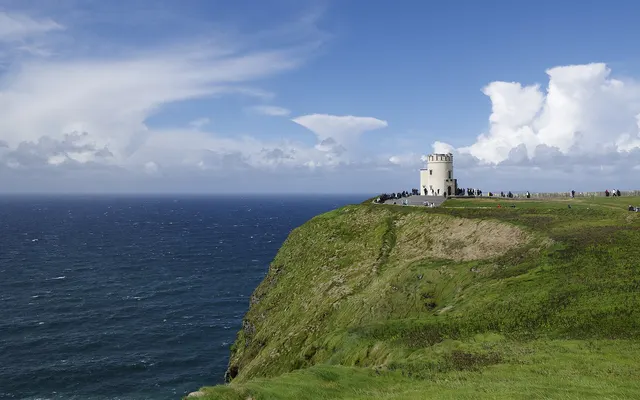
Dublin is the usual landing, with Galway, Cork and often a Cliffs of Moher or west-coast day. Those places are generally usable on Vodafone, Three or Eir. The confirmation that matters for many Canadian itineraries is the land border: if you will cross into Northern Ireland, pair the trip with a plan that also lists the United Kingdom.


Regions

The Republic of Ireland is often planned as a Dublin stay plus one coastal or western loop, rather than as a complete national tour. Dublin is the usual international arrival and a complete city trip; many first visits stay there, or add day trips to the nearby coast or to a historic site. The west includes Galway, the Cliffs of Moher and, further, parts of County Clare and Connemara, which is a different landscape and a longer transfer. The southwest includes Cork, Killarney and the Ring of Kerry. The northwest and Donegal are quieter, more spread out, and more of a driving plan. The southeast, including Waterford and Wexford, is less often on a first Canadian itinerary.
Northern Ireland is part of the United Kingdom, not the Republic, and should be confirmed on the country list if a Belfast or Giant's Causeway day is on the itinerary; a Republic of Ireland eSIM will not automatically cover the UK, and a UK eSIM will not automatically cover the Republic. Coverage in the Republic is generally strong in Dublin, Cork and other cities, and more variable on some western coasts, in the hills, and on the islands. Confirm the partner network — Vodafone, Three or Eir — if you will drive the west.
People and Demographics

Ireland has a population of around 5 million in the Republic; confirm the latest official figure if you need a current total. English is the everyday language of travel and almost all daily life. Irish (Gaeilge) is the first official language and is visible on signs, especially in Gaeltacht areas of the west; as a visitor you can travel in English everywhere, and a little respect for Irish-language place names is appreciated. The population is historically Catholic, which still shapes some public holidays and the cultural calendar, with a growing unaffiliated share and other communities in the cities.
Dublin is by far the largest metro and the capital. Cork is the main city of the south; Galway, Limerick and Waterford are the other traditional cities. The photographs on this page follow a common first-trip pattern: Dublin, a western coastline, and a town such as Galway. Population and mobile capacity are concentrated in Dublin and a handful of other cities; the west and some rural counties are more sparsely inhabited, which is why coverage should be confirmed on a coastal drive.
Currency and Costs

The currency in the Republic of Ireland is the euro. (Northern Ireland uses the pound sterling.) Cards and contactless payments are widely accepted in cities, hotels and many restaurants; cash is still useful in some rural pubs and small businesses. ATMs are common in towns; confirm fees with your Canadian bank. We do not publish hotel or restaurant prices. Dublin is generally expensive; rural stays and shoulder-season trips can be easier, while peak-summer coastal lodges are not always a bargain — confirm current prices for your dates.
Tipping customs differ from North America; confirm if a service charge is already on the bill. For the eSIM, confirm the plan price on the provider's site. If your trip also includes Northern Ireland or a flight onward to Britain, confirm a plan that lists both the Republic and the United Kingdom, or buy two plans. A Republic-only plan is enough for a Dublin-and-Galway trip that never crosses the border. Confirm the country list.
Best Time to Visit

Late spring through early autumn is the most popular period for a coastal or driving holiday. July and August are the busiest, and often the most expensive, in Dublin and in the west. Weather is changeable in every month; rain is possible even in midsummer, and the west is often wetter than the east. Shoulder seasons in May, June, September and early October can be excellent for cities and for the coast if you want fewer crowds, with a real chance of mixed weather. Winter is a city season in Dublin, with short days, and a harder time for a walking holiday in the west.
Festivals in Galway and Dublin, and some bank-holiday weekends, can make hotels scarce; confirm dates. For an eSIM, a one-week Dublin trip is a simple validity window. A driving trip in the west, or a loop that also enters Northern Ireland, is when you should confirm the partner network, the country list, and offline maps. Wind and rain are planning issues; a working phone helps you rearrange a cliff walk when the forecast shifts.
Getting There From Canada

Toronto Pearson (YYZ) has had frequent direct flights to Dublin, and Montréal–Trudeau (YUL) and Vancouver (YVR) also serve Dublin on a mix of direct and connecting itineraries; some seasonal flights also serve Shannon or, less often, other airports. Confirm current schedules. If you connect through the United Kingdom or another European airport, an Ireland eSIM will not cover that layover unless the plan lists the layover country.
Dublin is the usual first city; Shannon can be more convenient for a western loop. Confirm which airport your ticket uses and how you will reach the city or the first hotel. Ferries from Britain are another arrival method if you are already in the UK, and that arrival is also a country-list problem for your eSIM. Entry to Ireland is not the same as entry to the Schengen Area; confirm current documentation for Canadian citizens before you fly. A travel eSIM does not replace a passport. Confirm official advice.
Getting Around

In Dublin, buses, some light rail, walking and official taxis or ride-hailing cover most visitor days; a data path makes maps and tickets easier. Between cities, trains and buses serve the main corridors, but a rental car is the normal tool for the west, Connemara, Kerry and any itinerary that is about the coast rather than about a single city. Driving is on the left, and rural roads can be narrow.
Download offline maps before a western or coastal day. Coverage can dip on some cliffs, in the hills and on the islands. Do not treat a travel eSIM as a safety device on a windy path. If you will cross into Northern Ireland, confirm that the same plan lists the United Kingdom, or buy a second eSIM, before you rely on maps on the other side of the border. Keep a portable charger with you on long driving days. Confirm fuel and parking in towns, where a working payment app may still need a signal.
Mobile Networks and Coverage

Cities and main roads are typically strong. Rural west, some peninsula roads and hill country can be patchier. We do not publish a coverage percentage. Confirm the network if you will drive a coastal route, and download offline maps. Northern Ireland is part of the United Kingdom, not the Republic of Ireland. A plan that lists only Ireland may not cover a crossing to Belfast or the north coast — confirm the UK is also listed if you will cross the border.
eSIM Plan Advice By Trip Type

An Ireland country plan is enough if you will stay in the Republic. If you will also visit Northern Ireland or the rest of the UK, confirm a plan that lists both Ireland and the United Kingdom. If France or another European country is on the same trip, a Europe regional eSIM can be simpler, still with that UK confirmation. Confirm validity start and hotspot rules.
Tips for Canadians

Flights from Canada may be direct to Dublin in season or may connect through the UK, Europe or the US. An Ireland eSIM will not cover a US layover, and it may not cover a UK connection — confirm each leg. Your Canadian number can stay installed; confirm voice and SMS terms with your carrier.
Install at home. Keep the Canadian line for calls and codes, set data to the eSIM after landing, and turn Canadian data roaming off. Confirm hotspot permission if you share a plan. A travel eSIM is usually data-only.
Confirm whether your Europe regional plan lists both Ireland and the UK if a Northern Ireland day is possible. Install at home, keep the Canadian line for calls and codes, and turn Canadian data roaming off after you arrive. Confirm hotspot rules. Download offline maps before a west-coast drive.
Safety and Connectivity Tips

Follow current official travel advice for Ireland; we do not invent risk scores. In Dublin, the usual habits apply: keep valuables in sight on buses and in crowded nightlife streets, use official taxis or a known ride-hailing app, and be careful of unattended bags. Emergency numbers may differ from Canada; confirm them. On the west coast, wind, cliff edges and wet roads are the more common practical issue; confirm forecasts and path closures.
Keep your Canadian line installed for calls and banking texts, set mobile data to the Ireland eSIM after you arrive, and turn data roaming off on the Canadian line unless you have confirmed a carrier Europe or UK-and-Ireland pack. Wi-Fi calling on the Canadian number may work on hotel Wi-Fi; confirm that with your carrier. Share your route if you will drive the coast, and download maps while you still have a signal. A travel eSIM is not travel insurance. If Northern Ireland is on the itinerary, confirm the country list before you leave Dublin.
What Canadians Should Also Know
- Pair with a plan that also covers the UK if you will cross into Northern Ireland.
Frequently Asked About eSIMs in Ireland
Will my Ireland eSIM work in Belfast or along the border?
Is a regional plan useful for an Ireland-only holiday?
How Much Data to Buy for Ireland
For maps, messaging and bookings, most travellers use roughly 0.25–0.5 GB a day. Add more for video calls, social uploads or using your phone as a hotspot. These figures are a starting point, not a measured study and not a provider quote. Confirm plan sizes on the provider's site.
| Trip | Light use | Moderate | Heavy |
|---|---|---|---|
| 1 week | 2–3 GB | 5 GB | 10 GB+ |
| 2 weeks | 3–5 GB | 10 GB | 20 GB+ or unlimited |
| 1 month | 5–10 GB | 20 GB | Unlimited |
Estimates, not provider figures. Use the compare tool for Ireland for a personalised estimate.
Step-by-step dual-SIM settings: keep your Canadian number. For a broader look at carrier roaming versus a travel eSIM, see Canadian carrier roaming (confirm current rates in your account; we do not invent prices).
Compare Plans for Ireland
Confirm price, validity, country list and network on the provider's site before you buy. Order below is fixed; providers cannot pay for position. Until a tracking link is configured, some buttons open an official-site interstitial rather than an earning link. Disclosure.
Opens Yesim in a new tab. We do not have a verified published price for this destination yet. Confirm the live price on the provider's site before you pay. You pay only the eSIM plan price; no carrier roaming charges.
- Yesim View plans
- Saily View plans
- Airalo View plans
- GigSky See Similar Plans at Yesim
- Drimsim View plans
- Holafly See Similar Plans at Yesim
- Nomad See Similar Plans at Yesim
- Maya Mobile See Similar Plans at Yesim
- Ubigi See Similar Plans at Yesim
- aloSIM See Similar Plans at Yesim
Open the compare planner for Ireland.
Airport Transfers
- Kiwitaxi View offers
- Welcome Pickups View offers
Car Rentals
- Localrent View offers
- GetRentacar View offers
- QEEQ View offers
- Economybookings View offers
Tours and Tickets
- Tiqets View offers
- Klook View offers
- WeGoTrip View offers
Flight Delay Claims
- AirHelp View offers
Flights
- Aviasales View offers
 eSIM for United Kingdom
 eSIM for France
 eSIM for Italy
 eSIM for Spain
 eSIM for Portugal
 eSIM for Germany