- Recommended
- Country plan · or a regional plan for a multi-country Europe trip
- Region
- Europe
- Major networks
- Magyar Telekom · Yettel · One
- Listed by
- Airalo · Yesim · Drimsim · GigSky
- Country code
 HU
Overview
Hungary is best known for Budapest, a capital split by the Danube into hilly Buda and flat Pest, with thermal baths, grand architecture and a busy night life. Many Canadians arrive as part of a Danube river cruise or a Central European loop with Vienna and Prague, which makes a Europe regional eSIM a common choice. Magyar Telekom, Yettel and One are the national networks, with strong coverage in cities.
Top Cities and Places in Hungary
In Budapest, visitors see the Parliament building, Buda Castle, the Fisherman's Bastion, the Chain Bridge and the Széchenyi and Gellért thermal baths. The Jewish Quarter is known for its ruin bars. Outside the capital, Szentendre is an artists' town on the Danube, Eger is known for its castle and wine, Pécs for its Roman-era sites and Mediterranean feel, and Lake Balaton is Hungary's summer lake resort.
Regions
Central Hungary includes Budapest and the Danube Bend to the north. Transdanubia in the west includes Lake Balaton, Győr and Pécs and borders Austria, Slovenia and Croatia. The Great Hungarian Plain in the east and south is flat farm and steppe country, with Debrecen and Szeged and the Hortobágy National Park. Northern Hungary has low mountains and the wine regions of Eger and Tokaj.
People and Languages
Hungary has a population of roughly 9.6 million; confirm the latest official figure if you need a current total. Hungarian is the official language and is unrelated to its neighbours' languages, so signs can be hard to guess. English is common in Budapest's tourist areas and among younger people, and German is understood in some western regions. A translation app with camera mode is particularly useful.
Currency and Payments
Hungary uses the forint, not the euro. Cards and contactless are widely accepted in Budapest. Some places quote or accept euros, often at poor rates. Use bank ATMs, choose to be charged in forint when a terminal asks, and check restaurant bills for service charges. We do not publish hotel or restaurant prices.
Best Time to Visit
Spring and early autumn are comfortable for sightseeing in Budapest. Summer is hot and busy, and Lake Balaton is in high season. December brings Christmas markets in Budapest. Winter is cold, but the thermal baths are popular year-round. River cruises on the Danube run mostly from spring through December.
Getting There From Canada
Most itineraries from Canada to Budapest connect through a European hub such as Frankfurt, Munich, Vienna, Amsterdam or Warsaw; seasonal direct flights from Toronto have operated in some years, so confirm current schedules. Many travellers arrive by train from Vienna, under three hours away, or by river cruise. A Hungary eSIM will not cover a layover in another country.
Getting Around
Budapest has a metro, trams, buses and suburban trains, and tickets can be bought in the BudapestGO app. The tram along the Danube is a scenic way to see the city. Trains connect Budapest with Vienna, Lake Balaton, Pécs, Eger and Debrecen. Ride-hailing is available in Budapest. A rental car is useful for wine regions and small villages.
Mobile Networks and Coverage
Magyar Telekom, Yettel and One provide strong 4G and expanding 5G in Budapest and other cities, and good coverage along main roads and rail lines. Rural areas of the Great Plain and hilly wine regions can have weaker spots. Confirm your eSIM's partner network on the plan page.
eSIM Plan Advice by Trip Type
For a Budapest city break, a Hungary country plan is enough. For a Danube cruise or Central European trip, choose a Europe regional plan and confirm that Hungary, Austria, Slovakia, Germany and any other stops are listed. Cruise ships may offer onboard Wi-Fi, but it is often slow; eSIM data works when the ship is close to shore and within coverage.
Practical Phone Tips
Useful phone habits for Hungary: install the BudapestGO app for transit routes and tickets in the capital, and the MÁV app for national trains, including services to Lake Balaton and Vienna. Thermal baths such as Széchenyi and Gellért sell timed tickets online, which saves queues in summer. Because Hungarian is unrelated to most European languages, a translation app with camera mode is especially handy for menus and signs outside tourist areas. Taxi fares in Budapest are regulated, but ride-hailing through an app avoids misunderstandings. Most hotels, cafés and many trams offer Wi-Fi. When paying by card, choose forint rather than Canadian dollars. The emergency number 112 works across Hungary. If you are travelling on a river cruise, ask the cruise line about onboard Wi-Fi limits, and use your eSIM data in port for maps and bookings.
Tips for Canadians
Keep your Canadian number active for calls and banking codes. For river cruises, check that your plan covers every country on the itinerary, which can include Germany, Austria, Slovakia, Hungary, Croatia, Serbia and Romania.
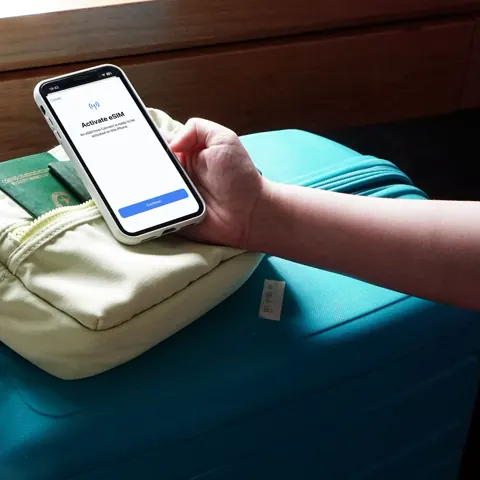
Install the eSIM at home, set it as the data line after landing, and turn off Canadian data roaming. Buy transit tickets in the app to avoid queues at machines.
Confirm your phone is unlocked and eSIM-compatible, check validity start, and list every country on your route, especially for cruises.
Safety and Connectivity
Follow current Government of Canada travel advice for Hungary at travel.gc.ca; we do not invent risk scores. Budapest is generally safe for visitors. Watch for pickpockets on public transport and in night-life areas, check bills carefully, and use licensed taxis or ride-hailing apps.
What Canadians Should Also Know
- Danube river cruises often cross several countries in a day; choose a regional plan that lists all of them.
Frequently Asked About eSIMs in Hungary
Does my eSIM work on a Danube river cruise?
Is Hungary on the euro?
Which network is best in Budapest?
Can I use my eSIM at Lake Balaton?
Should I buy transit tickets in the BudapestGO app?
Compare Plans for Hungary
These providers list Hungary on their own sites. Confirm price, validity, data allowance and network before you buy. Order is fixed; providers cannot pay for position. Some links earn us a commission at no cost to you. Disclosure.
- Airalo View Plans
- Yesim View Plans
- Drimsim View Plans
- GigSky See Similar Plans at Yesim
Where This Coverage Data Comes From
| Provider | Source | Checked |
|---|---|---|
| Airalo | Airalo Hungary page | 18 November 2026 |
| Yesim | Yesim Hungary page | 18 November 2026 |
| Drimsim | Drimsim Hungary page | 18 November 2026 |
| GigSky | Similar plans at Yesim Source: gigsky.com/country/esim-in-hungary | 18 November 2026 |
A provider listing a destination does not guarantee coverage everywhere in it. Rural, mountain and offshore areas can have gaps.
How Much Data to Buy for Hungary
For maps, messaging and bookings, most travellers use roughly 0.25–0.5 GB a day. Add more for video calls, social uploads or hotspot use. These are estimates, not provider figures. Use the data calculator for a personal estimate.
More Destinations in Europe
- eSIM for Austria
- eSIM for Belgium
- eSIM for Czech Republic
- eSIM for Denmark
- eSIM for Malta
- eSIM for Norway
- eSIM for Poland
- eSIM for Sweden
 eSIM for Austria
 eSIM for Belgium
 eSIM for Czech Republic
 eSIM for Denmark
 eSIM for Malta
 eSIM for Norway
 eSIM for Poland
 eSIM for Sweden
All destinations · What is an eSIM? · Phone compatibility · eSIM vs roaming