- Recommended
- Country plan · or a regional plan for a multi-country Latin America trip
- Region
- Latin America
- Major networks
- Entel · Movistar · Claro · WOM
- Listed by
- Airalo · Yesim · Drimsim · GigSky
- Country code
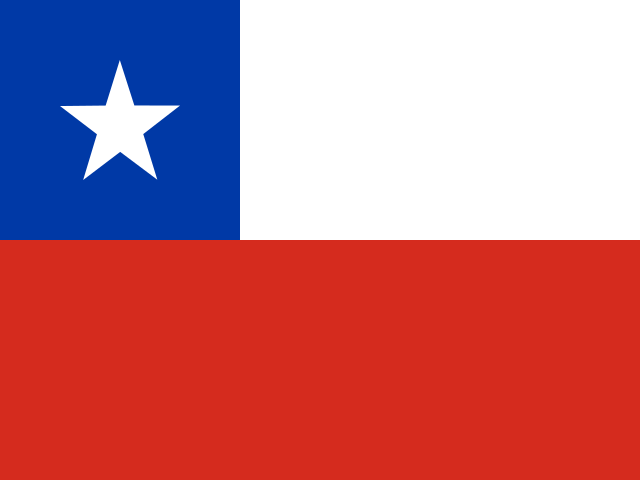 CL
Overview
Chile stretches more than 4,000 kilometres from the Atacama Desert to Patagonia, so travellers often fly between very different regions. Santiago is the usual arrival, with wine valleys, the coast and the Andes nearby. Entel, Movistar, Claro and WOM are the main networks, and coverage is strong in cities and central Chile but sparse in remote deserts, mountains and southern Patagonia. A Chile plan suits single-country trips; a Latin America regional plan helps if you are continuing to Argentina, Peru or Bolivia.
Top Cities and Places in Chile
Santiago has the Plaza de Armas, Cerro San Cristóbal, the Bellavista and Lastarria neighbourhoods and a strong food and wine scene. Valparaíso, a UNESCO-listed port city, is known for colourful hillside houses and funiculars, with the beach resort of Viña del Mar nearby. The Atacama Desert around San Pedro de Atacama offers salt flats, geysers and stargazing. In the south, the Lake District around Puerto Varas and Pucón has volcanoes and lakes, and Patagonia includes Torres del Paine National Park and the Carretera Austral. Easter Island (Rapa Nui) lies far out in the Pacific.
Regions
The north (Norte Grande and Norte Chico) is dominated by the Atacama Desert and mining towns. Central Chile includes Santiago, Valparaíso and the wine valleys of Casablanca, Maipo and Colchagua. The south includes the Lake District and the island of Chiloé. Patagonia (Aysén and Magallanes) covers the far south, with Punta Arenas and Puerto Natales. Easter Island and the Juan Fernández Islands are Chilean territories in the Pacific.
People and Languages
Chile has a population of roughly 19.5 million; confirm the latest official figure if you need a current total. Spanish is the official language, spoken quickly and with distinct Chilean slang. English is common in high-end hotels and tour companies but less so elsewhere, so a translation app is useful.
Currency and Payments
Chile uses the Chilean peso. Cards and contactless are widely accepted in cities, hotels and larger restaurants. Cash is useful in small towns, markets, some buses and remote areas. Foreign tourists can sometimes avoid VAT on hotel bills when paying in US dollars or by foreign card; ask the hotel. We do not publish hotel or restaurant prices.
Best Time to Visit
Chile's seasons are the reverse of Canada's. Patagonia is best from roughly November to March, when trails and services are open. Santiago and central Chile are pleasant in spring (September to November) and autumn (March to May). The Atacama can be visited year-round, with cold nights. The Andes offer skiing from roughly June to September.
Getting There From Canada
Air Canada has operated direct flights between Toronto and Santiago, and LATAM and other carriers connect through South American and US hubs; confirm current schedules. Domestic flights from Santiago reach Calama (for the Atacama), Puerto Montt, Punta Arenas and Easter Island. If you connect through the US or another country, your Chile eSIM will not cover the layover.
Getting Around
Domestic flights are the practical way to cover Chile's long distances. Long-distance buses are comfortable and well organised. Santiago has an extensive metro, and ride-hailing apps operate in larger cities. A rental car is common in the Lake District, the Atacama and the Carretera Austral, where public transport is limited. Ferries serve Chiloé and parts of Patagonia.
Mobile Networks and Coverage
Entel, Movistar, Claro and WOM provide strong 4G and growing 5G in Santiago, Valparaíso and other cities. Coverage thins quickly in the Atacama, the Andes, the Carretera Austral and Patagonian parks; Torres del Paine has coverage at some lodges and entrances but not on most trails. Confirm the partner network on the plan page and plan offline maps and paper backups for remote areas.
eSIM Plan Advice by Trip Type
For Chile only, a country plan is enough. If you are crossing into Argentina, Peru or Bolivia, a Latin America regional plan that lists every country avoids switching at the border. In remote areas, larger data bundles will not help if there is no signal, so plan for offline use.
A Typical Trip
A typical first trip to Chile spends a few days in Santiago with a day in Valparaíso and a wine valley, then flies to the Atacama, the Lake District or Patagonia. Many visitors combine Patagonia with Argentina's El Calafate and El Chaltén. Data use is moderate in cities, with long offline periods in parks and deserts. Download offline maps, reservation confirmations and trail information before you leave Santiago or Puerto Natales.
Practical Phone Tips
Useful phone habits for Chile: Uber, Cabify and DiDi operate in Santiago and other cities. Torres del Paine and some other parks require online reservations for campsites and refugios, which must be booked well in advance. Chile uses Type C and L plugs and 220 volts; bring an adapter. The emergency numbers are 131 for ambulance, 132 for fire and 133 for police.
Tips for Canadians
Keep your Canadian number active for calls and verification texts. Chile is only a few hours ahead of Eastern Canada for much of the year, which makes keeping in touch easy. Canadian carrier roaming in South America can be expensive, so compare with a travel eSIM.
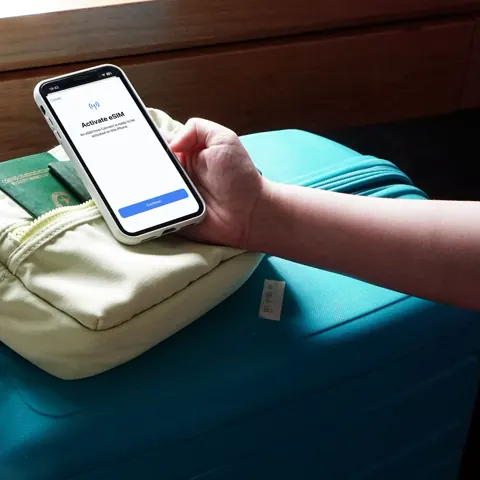
Install the eSIM at home, set it as the data line after landing and turn off roaming on the Canadian line.
Confirm your phone is unlocked, check that Chile is listed, and check validity start. Download offline maps for every remote region on your route.
Safety and Connectivity
Follow current Government of Canada travel advice for Chile at travel.gc.ca; we do not invent risk scores. Petty theft and phone snatching occur in Santiago and Valparaíso, so keep your phone secure in public. Chile is earthquake-prone; follow local guidance and tsunami signs on the coast. In the mountains and Patagonia, weather can change rapidly.
What Canadians Should Also Know
- Patagonia, the Atacama and the Andes have long stretches without coverage; plan offline maps.
Frequently Asked About eSIMs in Chile
Does my eSIM work in Torres del Paine?
Will my eSIM work in the Atacama Desert?
Should I buy a Chile or Latin America plan?
Do I need a power adapter in Chile?
Compare Plans for Chile
These providers list Chile on their own sites. Confirm price, validity, data allowance and network before you buy. Order is fixed; providers cannot pay for position. Some links earn us a commission at no cost to you. Disclosure.
- Airalo View Plans
- Yesim View Plans
- Drimsim View Plans
- GigSky See Similar Plans at Yesim
Where This Coverage Data Comes From
| Provider | Source | Checked |
|---|---|---|
| Airalo | Airalo Chile page | 18 November 2026 |
| Yesim | Yesim Chile page | 18 November 2026 |
| Drimsim | Drimsim Chile page | 18 November 2026 |
| GigSky | Similar plans at Yesim Source: gigsky.com/country/esim-in-chile | 18 November 2026 |
A provider listing a destination does not guarantee coverage everywhere in it. Rural, mountain and offshore areas can have gaps.
How Much Data to Buy for Chile
For maps, messaging and bookings, most travellers use roughly 0.25–0.5 GB a day. Add more for video calls, social uploads or hotspot use. These are estimates, not provider figures. Use the data calculator for a personal estimate.
More Destinations in Latin America
- eSIM for Panama
- eSIM for Belize
- eSIM for Bolivia
- eSIM for Ecuador
- eSIM for El Salvador
- eSIM for French Guiana
- eSIM for Guatemala
- eSIM for Guyana
 eSIM for Panama
 eSIM for Belize
 eSIM for Bolivia
 eSIM for Ecuador
 eSIM for El Salvador
 eSIM for French Guiana
 eSIM for Guatemala
 eSIM for Guyana
All destinations · What is an eSIM? · Phone compatibility · eSIM vs roaming